It knows your cover
caremate™ sees the cover you hold, so it asks about what matters to your claim and skips what doesn't.
Insurance only matters on the day you need it. Business cover and personal belongings claim differently, so pick yours.
caremate™ is the claims AI built into your careless™ dashboard. Tell it what happened in plain English and it gets your notification to the right claims team. No forms, no phone queue.
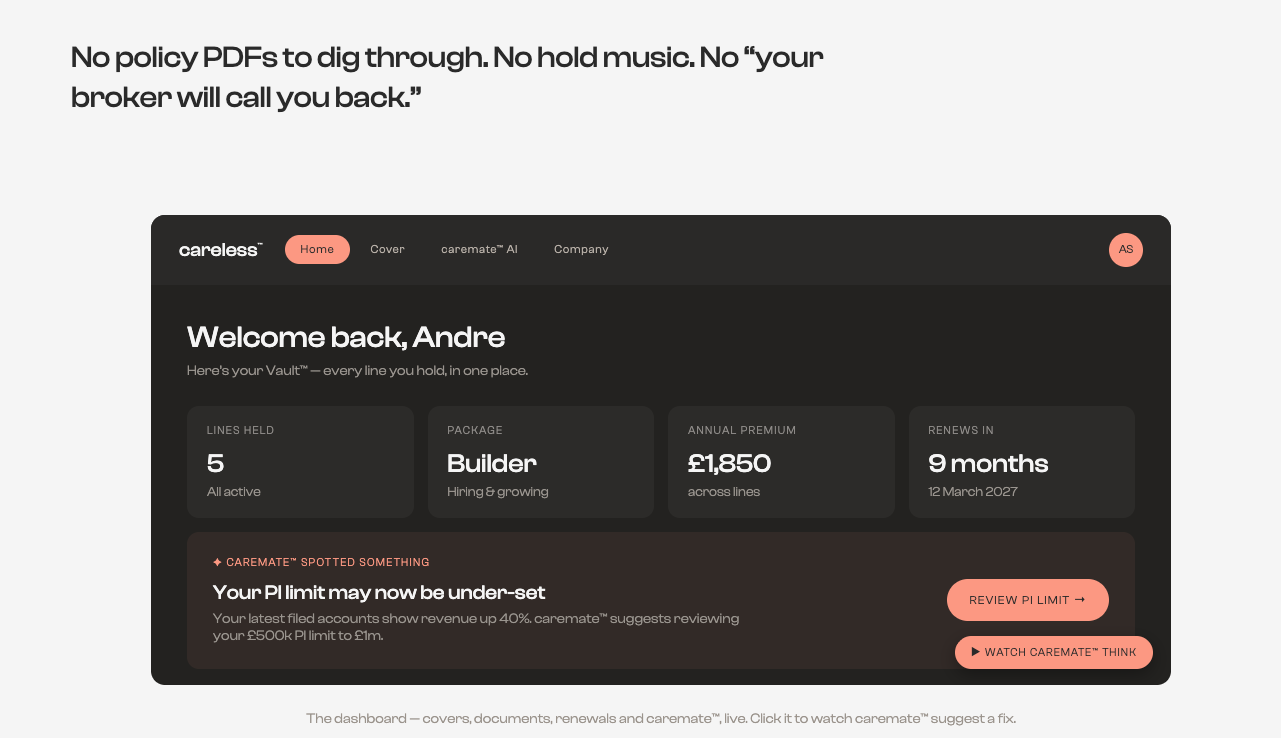
caremate™ sees the cover you hold, so it asks about what matters to your claim and skips what doesn't.
caremate™ takes the details; only you can file them. You read the claim back and confirm it before it goes anywhere.
Property and equipment breakdown claims go to different teams. Yours is routed to the right one for your policy, and a cyber incident or a legal expenses claim is sent straight to the insurer's own line.
For most claims, three ways, and any of them works. The fastest is telling caremate™ in your dashboard: it takes the details in plain English and the notification goes to the claims team for your cover. Prefer to write to us? Send the details through the contact page. Or go direct to the claims team yourself, using the phone numbers and addresses on this page. Cyber and legal expenses are the exceptions. A cyber incident is reported by phone to the HSB / CyberScout 24/7 helpline, on +44 (0)808 169 8084, not through caremate™ or us, because the helpline deals with the incident and the claim together. Legal expenses is the other: call the ARAG legal advice line on 0344 571 7978 first, then make the claim on ARAG's online claim at www.arag.co.uk/newclaims with your supporting documents, and don't instruct your own solicitor or accountant before telling ARAG. Report it as soon as you reasonably can; from there a specialist works it through to settlement.
It takes the details, and that part it's genuinely good at. caremate™ sees the cover you hold, asks about what happened in plain English, and puts the notification on the right desk. What it never does is file anything on its own: you read the claim back and confirm it before it goes anywhere. And the assessment and settlement always sit with a specialist claims team, not with software.
A specialist claims team appointed on the insurer's side assesses the claim and decides how it settles, and once it's open they're who you deal with about it. Our part is at the start: getting your notification to the right one of those teams, so you don't have to work out which desk your claim belongs to. You can also go to them direct: we're a convenience, not a step you have to pass through.
You don't need a dossier. The basics help a claim move faster: what happened and when, your policy and contact details, the details of anyone else involved, photos and proof of value, and any letter a third party has sent you. If something's missing, report it anyway. Better told promptly with what you have than late and complete.
It depends on the claim. A straightforward loss is quick to assess; a third-party dispute can take longer because there's another side to it. We won't pretend it's instant. Ask the team handling your claim where it's up to whenever you want to know, and if you can't get an answer out of them, come back to us.
Almost every claim has an excess: the first part of a claim you cover yourself, agreed up front before the policy pays the rest. You'll see your excess clearly on your policy before you ever need it, so it's never sprung on you at the worst moment.
Make people safe, stop things getting worse, and record what happened while it's fresh. Reporting it can wait until everyone's okay. When you're ready, it goes to us or straight to the claims team, whichever you prefer.
Read the full business claims guideA claim shouldn't turn into a second job. Get covered before you need it, and have a real team in your corner for the day you do.